
Why is Brain Health Important?

As the number of residents living with Alzheimer's and other forms of dementia continues to grow, the standard for daily excellence in care is evolving, particularly during mealtime. Communities face challenges like malnutrition risks, increased staffing needs, and rising costs, leading families to seek providers with specialized training and dining protocols.

These numbers show why this matters.

These numbers represent an opportunity. Research consistently shows that everyday choices, including nutrition, hydration, and the dining experience, can support resident longevity, dignity, and quality of life. When communities build their daily systems around brain health, they help residents thrive while strengthening the trust families place in their care.

What is Dementia?

“Dementia” describes a range of symptoms caused by changes in the brain, and no two residents experience it the same way. Understanding these differences helps teams personalize support at mealtime and throughout the day.

  • Alzheimer's (60-80% of cases): Affects memory and daily function.

  • Vascular Dementia: Challenges with organization and decision-making.

  • Lewy Body Dementia: Cognitive changes, movement difficulties, and psychosis.

  • Frontotemporal Dementia:  Changes in behavior, language, and loss of executive function. Most prevalent in younger populations, ages 45-64.

Understanding these differences helps our teams reduce common challenges that affect both residents and care teams: Some of these challenges include:

  • Memory and physical function: Cognitive decline and reduced motor skills can cause residents to miss meals and make using utensils tiring. This can lead residents to stop eating altogether.

  • Swallowing difficulties: Swallowing difficulties affect 13-57% of residents with dementia and can increase the risk of aspiration pneumonia, a leading cause of hospitalization.

  • Sensory changes: Reduced taste and smell can make food less appealing, while busy or noisy dining rooms can make it hard for residents to focus on their meal.
.
iStock-649145266 (1)-1

Understanding the Challenges Behind Cognitive Decline

While each person’s experience is unique, cognitive decline often creates challenges that impact nutrition, hydration, social connection, and overall well-being. For senior living communities, these challenges increase the complexity of care while also creating opportunities to better support residents through flexible and unique programs. 

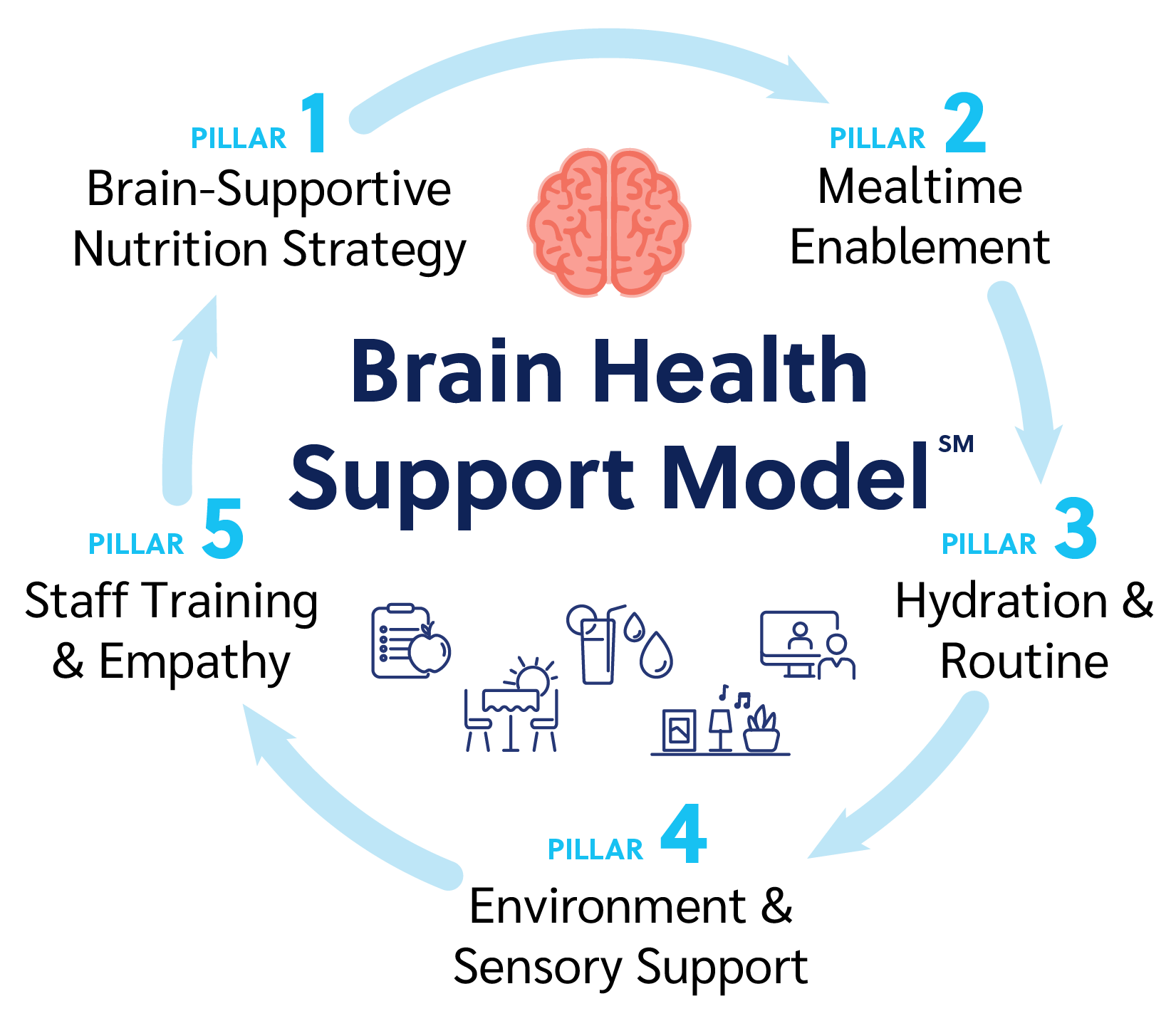
Forefront has created a Brain Health Support model that is an evidence-informed framework designed specifically for senior living environments to influence longevity.

Residents with Dementia
BY THE NUMBERS

dining-icon-c-1

~ 75 %

Experience mealtime challenges

dining-icon-c-2

70 %

Have low food intake

food-icon-c-2

94 %

Are at risk for malnutrition

food-icon-c-1

66 %

Are malnourished

Brain Health Support Model


Supporting brain health in senior living requires more than individual interventions. It requires an integrated system that connects nutrition, environment, hydration, dining practices, and staff training into a cohesive operational approach.

The Brain Health Support Model translates research into daily practices that influence:

  • Nutritional stability and hydration
  • Weight maintenance and reduced malnutrition risk
  • Resident dignity and independence
  • Mood, engagement, and sense of connection
  • Quality of life and longevity

Together, these pillars provide a structured framework for translating research into daily practice within senior living communities.

brain-graphic-pillars

From Insight to Everyday Impact

When the menu, the environment, and teams work together, the dining room becomes more than a place to eat. It becomes a source of stability, connection, and joy for residents and families alike.

Communities that embrace this approach see real, measurable outcomes:

  • Better nutrition: Residents eat more consistently, supporting weight stability and overall health.
  • More independence: Adaptive tools and finger foods allow residents to do more for themselves, freeing up associates to focus on meaningful interactions.
  • Stronger morale: Residents feel more confident and engaged, and families see the difference.
  • Operational Confidence: A structured, repeatable model that strengthens trust with residents and families alike.

Brain Health Beyond the Plate

The opportunity for senior living leaders is not simply to offer a “brain healthy menu.” It is to build a structured, integrated approach that supports residents at every point of the dining experience, from preference assessments to safe swallowing support, from hydration routines to sensory cues, from adaptive tools to staff training.

Ready to learn more?

Download the full brain health white paper for the complete research, data, and implementation guidance behind our Brain Health Support Model.

Forefront-Mockup-Brain-Health-Whitepaper-Cover-Full-NoShadow

Explore The Research