When it comes to supporting long-term cognitive health, what we put on our plates is one of the most powerful tools we have. Decades of nutritional research link specific, nutrient-dense ingredients with a measurable reduction in cognitive decline.
Forefront's Brain-Supportive Nutrition Framework (housed within Pillar 1 of our Brain-Health Support Model) translates this data into our nutrition strategy.
Our approach centers on the evidence that consistency matters more than perfection.
By intentionally integrating evidence-backed, brain-supportive ingredients into familiar meals, we can increase intake and actively protect and promote brain health.
Key Takeaways
- The MIND Diet Impact: High adherence to the MIND diet (Mediterranean-DASH Intervention for Neurodegenerative Delay) is associated with up to a 53% reduction in Alzheimer’s occurrence. The MIND diet is a research-backed eating pattern designed to support brain health and lower the risk of cognitive decline and dementia.
- Consistent Intake: Research shows that 44-66.5% of individuals with dementia are malnourished. Elevating familiar comfort foods with brain-healthy substitutions ensures consistent consumption.
- The Recipe for Longevity: Food preferences support intake, consistent intake supports cognitive stability, and stability supports overall longevity.
5 Foods That Elevate Brain Health
The foundation of a brain-supportive diet implements five cornerstone foods. Here is how these everyday ingredients actively strengthen and protect brain health:
1. Fish
Salmon and tuna provide rich sources of omega-3 fatty acids, which are essential for building and repairing brain cell membranes. Regular intake is consistently linked to sharper memory, enhanced mood regulation, and a decreased risk of long-term cognitive decline.
-
Implementation Tip: Aim to offer high-quality fish and seafood 3–5 times per week.
2. Dark Leafy Greens
Kale, spinach, and broccoli are packed with essential nutrients like vitamin K, folate, lutein, and beta-carotene. These compounds work collectively to slow down natural cognitive aging and boost overall memory retention.
-
Implementation Tip: 7 servings/week. Add dark leafy greens to smoothies.
3. Avocados
Rich in monounsaturated fats (healthy fats), avocados promote smooth, healthy blood flow to and through the brain. Better circulation directly translates to sharper everyday attention, stronger focus, and enhanced executive cognition.
-
Implementation Tip: Try cooking with avocado oil or extra-virgin olive oil instead of butter. (2 tablespoons per day). Use avocado on toast or bagels instead of butter or cream cheese.
4. Berries
Blueberries, strawberries, and blackberries contain powerful flavonoids that act as natural antioxidants. These compounds shield delicate brain cells from oxidative stress and inflammation while actively improving communication between brain cells.
Implementation Tip: 3-5 servings/week. In the winter months, consume frozen berries.
5. Beans and Nuts
This combination tackles both structure and energy. Nuts provide vitamin E and plant-based omega-3s to protect brain cell structures. Fiber-rich beans manage blood glucose control, supplying a slow, steady stream of mental energy without the crashes.
Implementation Tip: 4-5 servings/week. Add nuts as toppings to dishes to increase consumption.
Brain-Supportive Nutrition Framework
Forefront’s approach centers on a flexible framework inspired by the Mediterranean and MIND diets which are associated with slower cognitive decline. The framework emphasizes nutrient-dense foods while maintaining familiarity and resident acceptance. Rather than prescribing rigid diets, this framework guides menu development through frequency, quality, and preparation methods that support both cognitive health and consistent intake.
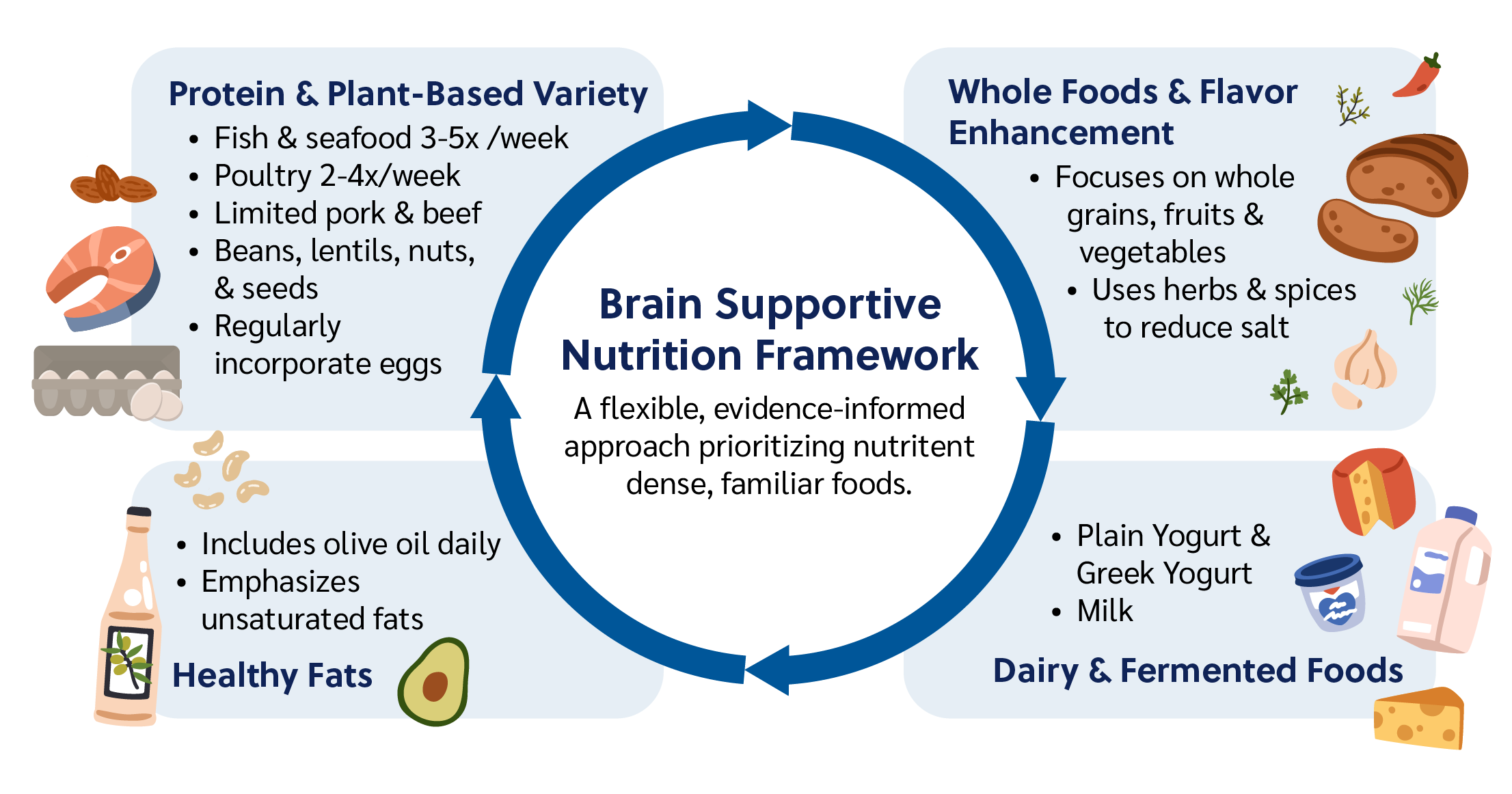
Applying the Framework in Practice
In practice, this approach does not require a rigid or unfamiliar menu overhaul. It requires intentional alignment.
For example:
-
A resident who enjoys traditional comfort foods can still receive brain-supportive options through ingredient substitutions
-
Familiar dishes can be adjusted to include whole grains, olive oil, legumes, or leafy greens
- Desserts can be paired with fruit-forward or yogurt-based alternatives
The objective is not to impose a diet. It is to elevate familiar foods with thoughtful adjustments that support long-term health while preserving enjoyment.
View a sample brain-supportive menu in the Brain Health Whitepaper.
Frequently Asked Questions (FAQ)
What is a brain-supportive nutrition framework?
It is an evidence-informed approach to menu development that prioritizes nutrient-dense food groups—like lean proteins, whole grains, and healthy fats—without enforcing restrictive or unfamiliar diets. It uses frequency, quality ingredients, and intentional preparation methods to seamlessly blend cognitive science with daily comfort food.
Can nutrition help individuals already living with dementia?
Yes. Studies consistently show that a consistent intake of brain-supportive nutrients can help slow the progression of cognitive decline and improve daily alertness. For individuals living with dementia, prioritizing nutrient density while preserving familiar flavors supports both their physical health and personal dignity.
How do you encourage consistency if someone is a picky eater?
The secret lies in alignment over overhaul. Instead of forcing completely new dishes, modify existing preferences. For instance, traditional comfort dishes can be prepared using olive oil instead of butter, or pair a favorite dessert with a fruit-forward or Greek yogurt-based alternative. When food remains recognizable and enjoyable, consistent intake follows naturally. Pair this with reducing mealtime challenges to strengthen overall intake.
Unlock the Complete Insights
Explore our complete Forefront Brain Health Whitepaper to discover how we integrate nutrition, dignity, and research into senior living communities.